“Back in 2009, Vietnam expected to usher in a nuclear power era, yet more than a decade later no plant is in operation. The Ninh Thuan project—the symbol of that ambition—was paused for many years and has only recently been given the green light by the National Assembly.”
Why Doesn’t Vietnam Have Nuclear Power Yet? The 10-Year Journey of the Ninh Thuan Plant
Ninh Thuan Races to Clear Land Bottlenecks
On the morning of September 8, Vice Chairman of the Provincial People’s Committee Trinh Minh Hoang chaired a meeting with departments, agencies, and local authorities to hear reports on compensation and land clearance for the Ninh Thuan Nuclear Power Plant Project.
Accelerating Compensation and Site Clearance
According to the Department of Agriculture and Environment, applying compensation prices for crops remains difficult because many local plant varieties are not listed in the province’s old land price table. Localities proposed using the price schedule under Decision 32/2024/QD-UBND of Khanh Hoa Province as a supplement. In particular, for grape variety NH01-126 (candy grape), it was suggested to apply the same price as NH01-48 (green grape).
Vice Chairman Hoang requested thorough review and close coordination with specialized agencies, along with regular on-site work with localities to promptly resolve issues. At the same time, communication and public outreach must be strengthened so residents understand and agree to hand over land.

Adjusting Resettlement Areas for Residents
That afternoon, provincial leaders continued discussions on relocating the resettlement area for the Ninh Thuan 2 Nuclear Power Plant. The original site of over 54 hectares in Thai An Hamlet, Vinh Hai Commune, included land within the plant’s emergency protection zone.
Specialized agencies proposed moving the resettlement area to Nhon Hai and Thanh Hai hamlets, also in Vinh Hai Commune. The new location offers ample land, is suitable for production and commercial services, and lies 3–5 km from the plant fence—matching recommendations from the Ministry of Science and Technology.

Vice Chairman Hoang emphasized that land clearance must be completed before the end of 2025, following the Prime Minister’s directive. The new resettlement area must be comprehensively planned with infrastructure, living environment, cultural facilities, and livelihoods to ensure long-term stability for residents. The Department of Science and Technology was assigned to invite ministry experts to explain the location change, while the Project Management Board must publicly share planning information so residents feel secure about relocation.
A Strategic Project for Vietnam’s Energy Security
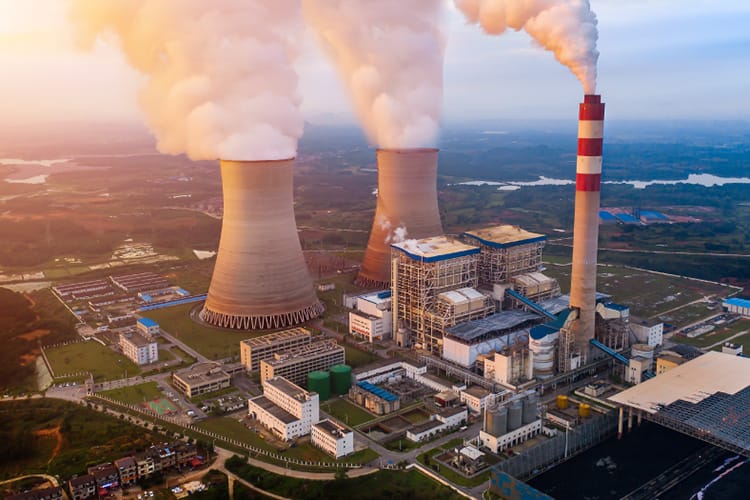
The Ninh Thuan Nuclear Power Project was approved by the National Assembly in 2009, comprising two plants with a total capacity of 4,000 MW across 1,642 hectares—a major milestone bringing nuclear technology in Vietnam to a new level.
However, in November 2016 the National Assembly suspended the project due to enormous investment costs, challenging macroeconomic conditions, and safety concerns after Japan’s Fukushima incident. The pause left prepared components idle and nuclear personnel dispersed.
After nearly a decade of “hibernation,” on November 25, 2024, the 13th Party Central Committee decided to restart the Ninh Thuan Nuclear Power Project. Days later, on November 30, 2024, the National Assembly at its 8th session (15th tenure) officially approved reinvestment.
To establish a legal framework, the amended Electricity Law has been promulgated, and the Government has scheduled amendments to the Atomic Energy Law to harmonize the legal system.
On December 5, 2024, General Secretary To Lam inspected the Ninh Thuan 1 site and directed rapid, synchronized implementation to avoid wasting more time on orientation or technology selection.

Electricity Demand and the Role of Nuclear Power
According to Power Development Plan VIII, Vietnam will need about 150,000 MW of power capacity by 2030, rising to 490,000–573,000 MW by 2050, with an average annual electricity growth rate of roughly 10%.
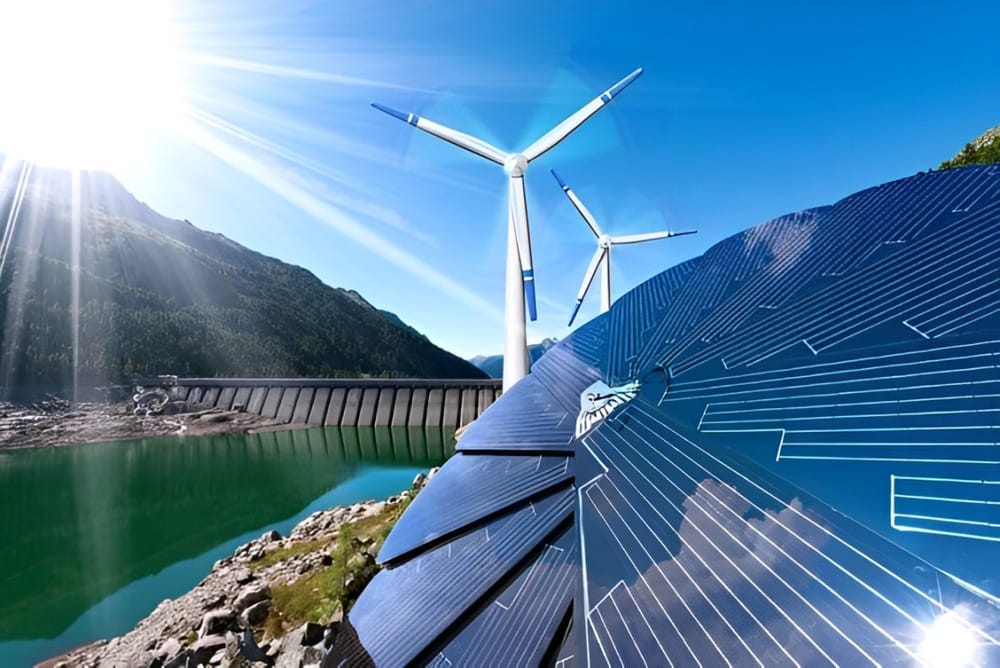
Renewable sources such as wind and solar are vital but weather-dependent, while coal-fired power faces pressure to cut emissions to achieve the Net Zero 2050 goal. Nuclear power, with stable output, reasonable cost, and low emissions, is emerging as a strategic choice for energy security and sustainable development.
New Signals for the Road Ahead
The determination of the Government, National Assembly, and local authorities shows that Vietnam is steadily overcoming past concerns and viewing nuclear power as a cornerstone of national energy security.
However, the project still faces numerous challenges: land clearance, retraining nuclear engineers, completing the legal framework, and ensuring absolute community safety. If these steps are implemented on schedule, the Ninh Thuan Nuclear Power Plant could begin operation in 2030–2031, marking a historic milestone for Vietnam’s energy sector.
(Vn-Industry.)
Source: Compiled
————————————–
📞 Hotline: +84 938 833 411
📧 Email: sales.vnindustry@gmail.com
🔗 Homepage: https://vn-industry.com
👉 Stay one step ahead – ASEAN is waiting for you!