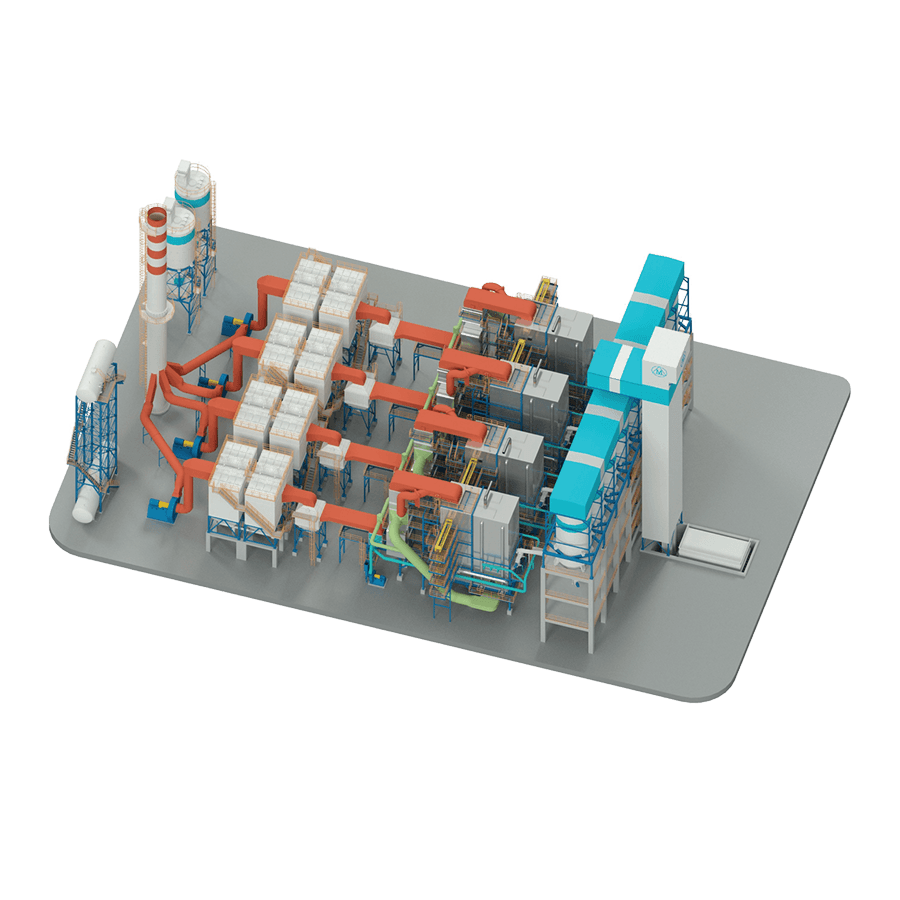
“In power plants, steam turbine-driven pumps provide efficient, self-sufficient fluid circulation, ideal for boiler feedwater but requiring specialized maintenance.”
Steam turbine-driven pumps
Steam turbines are used to drive feed water pumps. Large power plants often use these pumps because they can provide significant operational flexibility.
INTRODUCTION OF STEAM TURBINE-DRIVEN PUMPS
Steam turbine-driven pumps play a crucial role in numerous boiler systems and power plants. They efficiently move liquids, usually water, throughout the system, enabling a wide range of essential functions such as providing feedwater, facilitating cooling, and ensuring proper circulation. These pumps are powered by steam turbines. Which effectively harnesses the energy from high-pressure steam to rotate the pump’s impellers, ensuring their reliable operation.

Image 1 – Steam turbine-driven pumps
PURPOSE OF STEAM TURBINE-DRIVEN PUMPS
- Feedwater Pumps: One of the primary uses of steam turbine-driven pumps is to supply feedwater to the boiler. In a power plant, feedwater is heated in the boiler to produce steam for the turbines, and these pumps ensure a continuous and reliable supply of water to the boiler.
- Cooling Water Pumps: In power plants, cooling water pumps are essential for circulating cooling water through various heat exchangers to dissipate the heat generated during power generation.
- Circulation Pumps: These pumps help maintain the flow of water or other fluids within the system, ensuring even distribution and preventing overheating in various components.
PROS & CONS
Advantage:
- High Efficiency: They are known for their high efficiency in converting steam energy into mechanical work to drive the pump. This efficiency can lead to energy savings and reduced operating costs.
- Self-Sufficiency: These pumps are self-contained and do not rely on external power sources. So they can operate independently, which can be critical during power outages or emergencies.
- Continuous Operation: As long as there is a supply of high-pressure steam, they can provide continuous and reliable fluid circulation, making them suitable for critical applications like feed-water supply in power plants.
- Longevity: Properly maintained steam turbine-driven pumps can have a long operational lifespan, making them a cost-effective choice in the long run.
Disadvantage:
- Maintenance Complexity: Maintaining steam turbines and associated equipment can be complex and requires specialized knowledge and skills. Regular maintenance is crucial to ensure their reliability.
- Limited Turndown Ratio: These pumps may have limitations in terms of their turndown ratio (the range over which flow rates can be controlled). However, it can be a challenge when dealing with widely varying flow requirements.
- Steam Supply Requirements: These pumps depend on a continuous supply of high-pressure steam, which means they are subject to the availability and quality of steam in the power plant or boiler system.
- Space and Weight: These pumps can be large and heavy. Which may require additional space and structural support in the plant.
- Start-Up Time: It can take some time for a steam turbine to start and reach its operating speed. Which might not be suitable for applications requiring rapid response:
CONCLUSION
In summary, steam turbine-driven pumps offer high efficiency and self-sufficiency. Which makes them well-suited for specific applications in power plants and boiler systems. However, they come with higher upfront costs, maintenance complexities, and limitations in terms of turndown ratio and steam supply requirements. Choosing whether to use steam turbine-driven pumps or other types of pumps depends on the specific needs and constraints of the system and the overall plant design.
(Vn-Industry.)