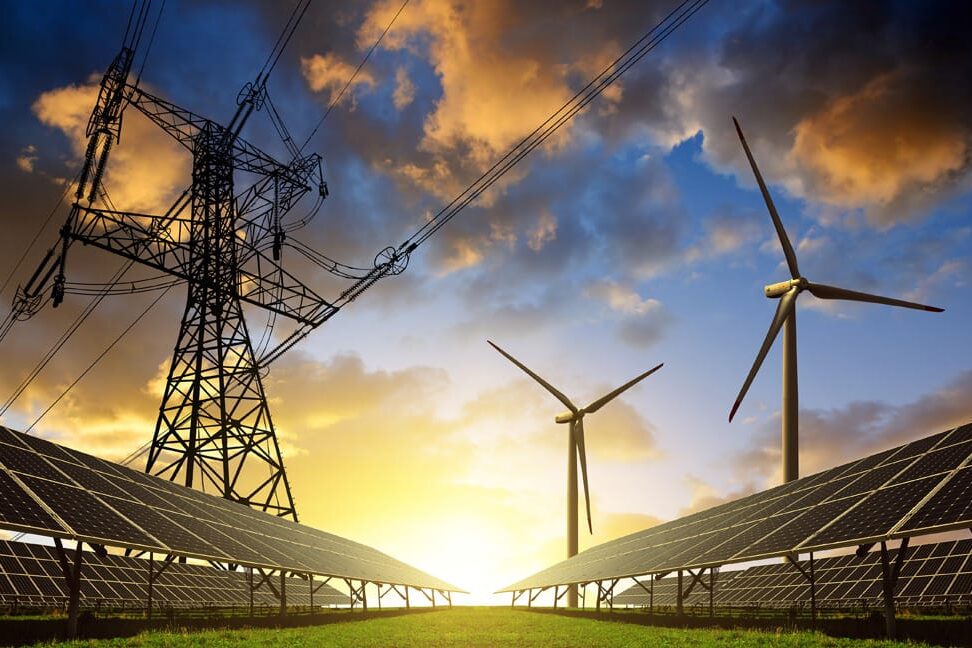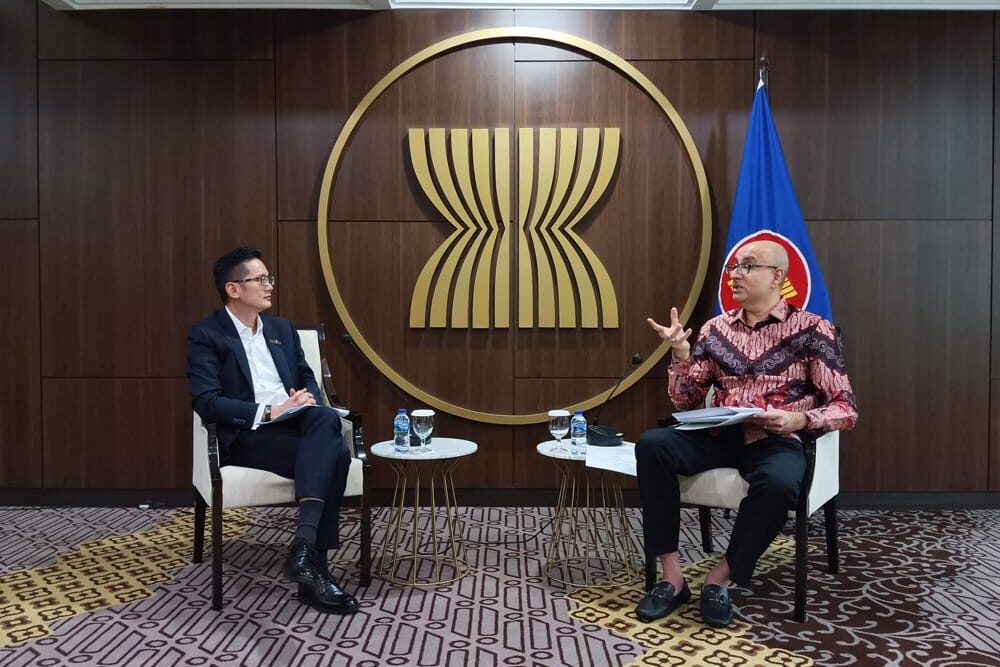
“Vietnam’s economy in 2025 aims for 8% growth, leading ASEAN through FDI, trade policies, and strategic export expansion efforts.”
Vietnam’s economic growth in 2025
Forecast to Lead ASEAN
INTRODUCTION
Vietnam’s economic growth in 2025 is forecasted to remain robust, positioning Vietnam as the leading economy in the ASEAN region. The government aims to achieve a GDP growth rate of at least 8%, higher than the previous target of 6.5% to 7.0%. This growth is primarily driven by ongoing business expansion and the significant contribution of foreign direct investment (FDI).
Standard Chartered Bank forecasts Vietnam’s GDP will grow by 6.7% in 2025, with 7.5% in the first half of the year and 6.1% in the second half. Ongoing business expansion and foreign investment play an essential role in boosting growth. The government also aims to control inflation at around 4.5% to 5.0%.

Figure: Vietnam’s economic growth 2025 (Source: Internet)
Vietnam accelerates shrimp exports to the U.S.
Amid global market fluctuations, Vietnam has recorded significant growth in shrimp exports to the United States. According to the Vietnam Association of Seafood Exporters and Producers, Vietnam was the only major shrimp exporter to achieve positive growth in the U.S. market in 2024. Specifically, Vietnam’s breaded shrimp exports increased by 33%, while Indonesia, the largest supplier, only saw a 5% increase. This shows that Vietnamese enterprises are effectively seizing opportunities to expand their market share in the U.S.
However, Vietnam’s seafood export market in January 2025 showed significant disparities in growth. While the Chinese and Hong Kong markets grew strongly by 64.9%, the U.S. and EU markets faced difficulties, declining by 16.0% and 17.6%, respectively. This poses challenges for shrimp exporters in maintaining and expanding market share in traditional markets.
Anti-dumping duties on Chinese hot-rolled steel in Vietnam
On February 21, the Ministry of Industry and Trade of Vietnam imposed temporary anti-dumping duties on certain hot-rolled steel products imported from China and India. The tax rate applied to Chinese companies such as Baoshan Iron & Steel and Maanshan Iron & Steel is 27.83%, while Guangxi Liuzhou Iron and Steel Group faces a 19.38% tax. This decision takes effect from March 7 and lasts for 120 days. The measure aims to protect the domestic steel industry from unfair competition caused by imported products.
For Indian products under investigation, the results showed dumping behavior, but due to the insignificant import share (below 3%), they were excluded from the temporary anti-dumping duties. This policy is expected to stabilize the domestic steel market and create favorable conditions for local businesses to grow.
Vietnam’s coffee consumption lags behind the global average
Despite being the world’s second-largest coffee exporter, Vietnam’s per capita coffee consumption is only about 2.2 kg per year, much lower than the global average of 5.5 kg per year. The primary reason is the habit of consuming low-cost instant coffee and the underdeveloped coffee culture.
To boost domestic consumption, enhancing product quality and diversifying coffee types is essential. Developing specialty coffee and premium brewed coffee culture could be an effective solution. Coffee shops need to diversify their offerings and create unique experiences to attract customers. Additionally, educating consumers about the benefits and value of high-quality coffee plays a crucial role in strengthening domestic consumption.
Vietnam is ready to dialogue with the U.S. on tariffs
In response to the U.S. imposing a 25% tariff on Vietnamese steel imports, the Vietnamese government has expressed readiness to engage in dialogue to find mutually beneficial solutions. A spokesperson for Vietnam’s Ministry of Foreign Affairs stated that Vietnam wishes to constructively discuss with the U.S. to avoid risks from additional tariffs. This move shows Vietnam’s proactive approach to maintaining stable trade relations with the U.S.
The 25% tariff, which does not exempt aluminum and steel imports to the U.S., poses challenges for Vietnamese exporters. However, according to Mr. Do Ngoc Hung, Trade Counselor and Head of the Vietnam Trade Office in the U.S., Vietnam still has many opportunities to expand its market share by diversifying products and leveraging bilateral trade agreements. Furthermore, the Vietnamese government is promoting trade dialogues to minimize the negative impact of U.S. tariff policies.
Vietnam expands U.S. agricultural imports to reduce tariff risks
To balance the trade deficit and mitigate risks from U.S. tariff policies, Vietnam is expanding imports of agricultural products from the U.S. According to the U.S. Department of Agriculture (USDA), U.S. agricultural exports to Vietnam reached $4.1 billion in 2024, an 18% increase compared to the previous year. Major products include corn, soybeans, beef, and powdered milk.
Increasing agricultural imports not only meets domestic demand but also serves as a strategy to facilitate smoother trade negotiations with the U.S. By boosting imports of U.S. products, Vietnam can strengthen bilateral cooperation and reduce the risk of additional tariffs on its exports.
Moreover, many Vietnamese businesses are using high-quality, imported raw materials from the U.S. to enhance the value of domestically processed products. For instance, Vietnam’s livestock industry is increasingly using U.S. corn and soybeans for animal feed, improving productivity and the quality of exported meat.
CONCLUSION
2025 will be a pivotal year for Vietnam’s economy, with both opportunities and challenges. Leading ASEAN in growth, expanding shrimp exports, imposing anti-dumping duties on Chinese steel, and increasing U.S. agricultural imports are strategic steps that will help Vietnam stabilize and develop its economy. However, to maintain growth momentum, Vietnam must continue to push for economic reforms, improve export product quality, and develop the domestic market.
With proactive policies, rising foreign investment, and a commitment to innovation, Vietnam is poised to become one of the fastest-growing economies in ASEAN in 2025.
(Vn-Industry.)
Source: Compiled
Home page: https://vn-industry.com/