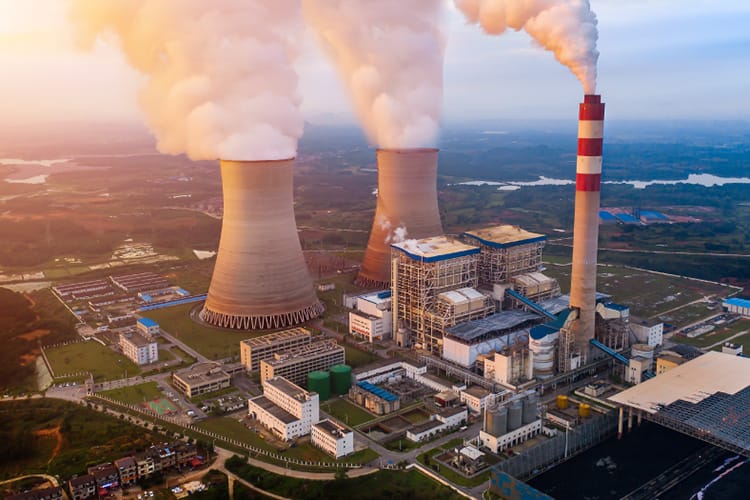
“Chain grate boilers efficiently generate steam for industries like food, textile, and rubber, offering fuel flexibility and automatic operation.”
Chain grate boiler
Structure and working principle
INTRODUCTION
Chain grate boiler is an indispensable part of industries such as food processing, textile dyeing, plastics, rubber, and many others, playing a crucial role in providing the necessary heat for production and power generation.

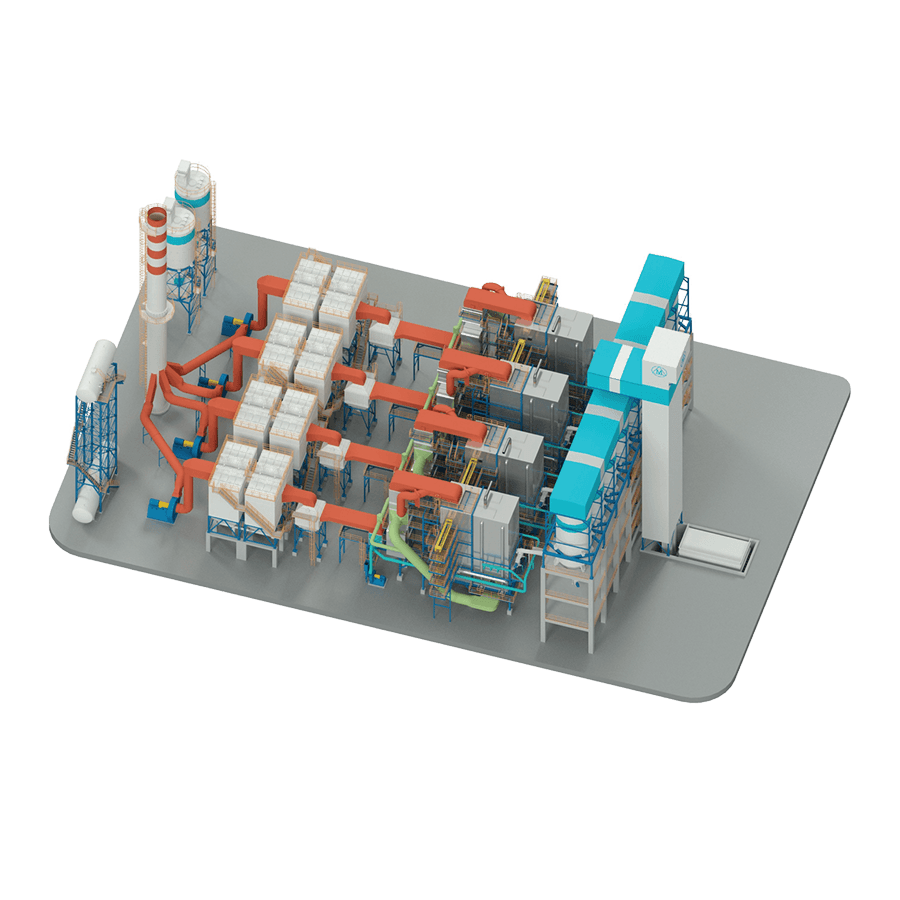
Figure 1 – Chain grate boilers
1- What is a Chain Grate Boiler?
A chain grate boiler is a vital device in production and power generation processes. It uses heat from burning fuel to heat water into steam, providing the required temperature and pressure for production. The chain grate boiler features a moving combustion chamber with a chain grate and a moving fuel layer, resulting in high efficiency and steam production reaching 120 tons/hour.

Figure 2 – Chain grate boilers
2- Structure of Chain Grate Boiler
Fuel Feeding System: Comprising equipment like loaders, fuel hoppers, bucket elevators, and conveyors, controlled automatically or semi-automatically to supply fuel flexibly.
Combustion Chamber and Boiler Body: Designed for thorough fuel combustion and optimal heat absorption, equipped with chain grates, air fans, and radiant heat-absorbing tubes.
Heat Recovery System: Used to utilize heat from exhaust gases and increase boiler efficiency.
Dust Filtration System: Industrial waste and crop residues provide potential raw materials for conversion into biomass fuel, contributing to environmental management and sustainable economic growth.
Draft Fan and Chimney: Maintain negative pressure in the combustion chamber and discharge exhaust gases into the environment.

Figure 3 – Chain grate boilers
3- Working Principle
a. Fuel Feeding and Combustion Process: The burning fuel is automatically metered and fed into the boiler through the fuel feeding system. At the external feeding hopper, due to gravity, the fuel is evenly distributed on the chain grate surface and continues to move into the combustion chamber. During this process, combustion occurs, generating heat and smoke.
b. Heat Transfer and Steam Separation: The heat generated from combustion transfers to the steam-generating tubes surrounding the combustion chamber. Water in these tubes boils and turns into steam. The steam-water mixture is concentrated in the steam drum, where steam is separated from the water mixture.
c. Efficiency Optimization: Unvaporized water is returned to the steam-generating tubes through the downcomer system located outside the wet walls. Water in these tubes, not heated, creates a weight difference in the water column, causing the medium to naturally circulate in a closed loop. When the boiler pressure reaches the limit, a circulation pump assists in moving water through the steam-generating tubes.
d. Heat Utilization: Unvaporized water is returned to the steam-generating tubes through the downcomer system located outside the wet walls. Water in these tubes, not heated, creates a weight difference in the water column, causing the medium to circulate in a closed loop naturally. When the boiler pressure reaches the limit, a circulation pump assists in moving water through the steam-generating tubes.
e. Water and Exhaust Gas Treatment: Feedwater is deaerated and preheated before being pumped into the steam drum. Meanwhile, air from the external environment is used to harness the heat of the exhaust gases. The exhaust gas temperature is regulated to avoid chimney corrosion due to condensation in the exhaust.

Figure 4 – Chain grate boilers principle
4- Advantages and Disadvantages
Advantages:
- Uses a variety of fuels and has a simple structure.
- Good chain grate cooling and easily adjustable load according to production needs.
- Automatic operation helps optimize labor costs.
Disadvantages:
- Chain grates are prone to damage and have high maintenance costs.
- Boiler efficiency is not high due to heat loss through slag.
- Not suitable for large-capacity boilers.
CONCLUSION
The chain grate boiler is an essential component in industries such as food processing, textile dyeing, and rubber manufacturing, providing necessary heat for production and power generation. Its efficient structure, including a fuel feeding system, combustion chamber, and heat recovery system, ensures effective heat transfer and steam production. While offering advantages like fuel versatility, simple structure, and automatic operation, the chain grate boiler also faces challenges like high maintenance costs and lower efficiency due to heat loss. Understanding these aspects helps industries optimize their operations while balancing costs and efficiency.
(Vn-Industry.)
Home page: https://vn-industry.com/