“Clean Energy Investment is vital to drive the green energy transition and foster cross-border energy cooperation across the ASEAN region by 2030.”
Clean Energy Investment in ASEAN
Bridging the $130 Billion Annual Gap for a Resilient, Low‑Carbon Region
INTRODUCTION
Why Clean Energy Investment in ASEAN Is a Tipping‑Point Issue
Southeast Asia’s GDP is projected to double by 2035, pushing electricity demand up by almost 70 %. Without decisive action, the region could lock in another generation of coal and gas assets. Clean Energy Investment in ASEAN offers a triple dividend:
| Benefit Pillar | Impact by 2030 | Examples |
|---|---|---|
| Economic | Adds > US$1 trillion in cumulative GDP via new global supply‑chain roles | Solar module manufacturing in Malaysia, and floating solar in Indonesia |
| Social | Creates > 6 million skilled jobs across construction, O&M, R&D | Vietnam’s offshore wind and Singapore’s green‑hydrogen hubs |
| Climate | Avoids ~2 Gt CO₂ emissions relative to BAU | Solar‑PV replacing diesel‑based grids in archipelagos |
Yet only US$30‑40 billion a year now flows into green energy. To align with Net‑Zero 2050 pledges, annual funding must leap to US$130 billion by 2030.
AEBF‑25: Kuala Lumpur’s “Green Finance & Grid” Agenda
From 15‑18 October 2025, Malaysia (as ASEAN Chair) hosts AEBF‑25 under the banner “Empowering ASEAN Energy: Cross‑Border Connectivity, Regional Prosperity.” Three co‑located meetings—AMEM‑43 and AICEE‑5—will unveil:
-
APAEC Phase III (2026‑2030) draft with a 2045 vision.
-
A ministerial declaration to scale the ASEAN Power Grid (APG) and ASEAN Gas Network.
-
A roadmap for regional carbon capture and storage (CCS) and low‑carbon hydrogen.
Key objective: unlock blended finance facilities so that every US $1 of public money mobilises US $4 of private capital.
 Figure 1 – Delegates at the ASEAN Energy Business Forum, highlighting the region’s unified commitment to clean‑energy investment.
Closing the $130 Billion Gap—Four Investment Engines
Green Bonds & Sukuk
-
-
ASEAN green‑bond issuance hit US$28 billion in 2024; Malaysia and Indonesia pioneered green sukuk structures aligned with Shariah principles.
-
AEBF‑25 will champion an ASEAN‑GCC Green Bond Standard, easing cross‑border listings in Kuala Lumpur, Dubai, and Singapore.
-
Public–Private Blended Finance
-
-
The ASEAN Catalytic Green Finance Facility (ACGF) has leveraged US $2.1 billion to date.
-
New “Energy Transition Mechanisms” (ETMs) aim to refinance early coal retirement—pilot projects in Indonesia (2 GW) and the Philippines (1 GW).
-
Utility‑scale Renewables & Storage
-
-
The levelised cost of solar in Thailand and Vietnam fell below 4 cents/kWh in 2024, cheaper than new coal.
-
Battery storage and pumped hydro will receive US $10 billion in concessional loans via the Asian Development Bank (ADB) and climate funds.
-
 Figure 2 – Expansive wind farms exemplify the region’s rapidly growing portfolio of utility‑scale renewables.
Cross‑Border Energy Cooperation
-
-
Green energy transition cannot happen without cross‑border energy cooperation: by 2030, at least 19 APG links should trade real‑time renewables.
-
Pilot hydrogen pipelines from Brunei’s ammonia plants to Singapore’s power sector are under feasibility study.
-
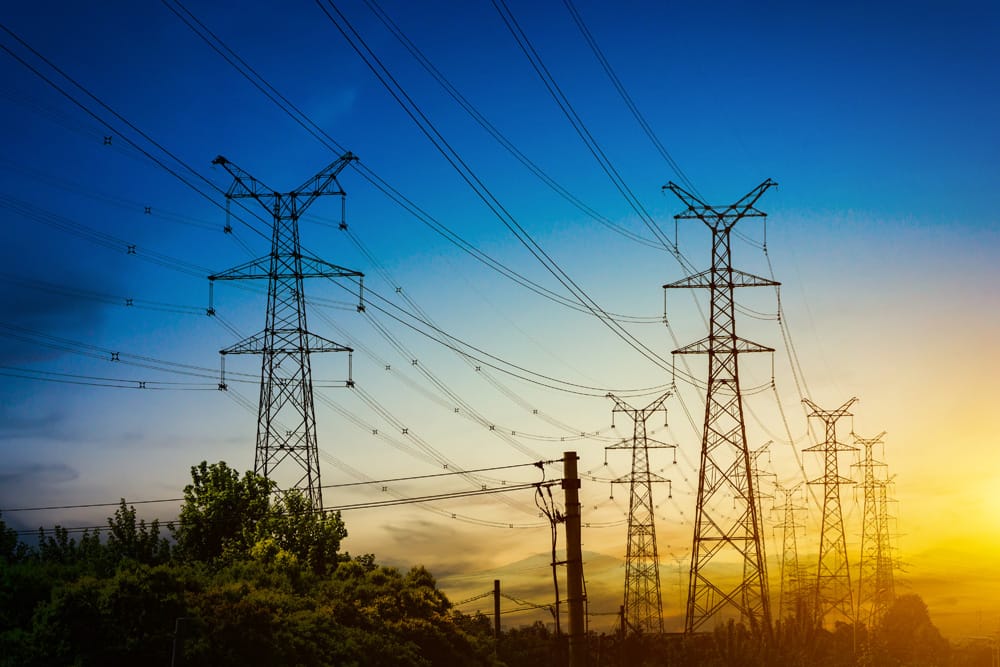
 Figure 3 – Modern high‑voltage lines underscore the importance of strengthening the ASEAN Power Grid for seamless renewable integration.
Country Highlights & Flagship Deals
| Country | 2025‑2030 Target | Flagship Project (Status) |
|---|---|---|
| Vietnam | 17 GW offshore wind pipeline | Sembcorp–PTSC 1.2 GW export C‑C approval; feasibility launch Oct 2025 |
| Malaysia | 40 % RE share by 2030 | Sarawak hydropower export to Singapore via 1 GW HVDC cable |
| Indonesia | Phase‑out 5.5 GW sub‑critical coal | ETM pilot + 600 MW floating solar at Cirata |
| Philippines | 50 % RE capacity by 2040 | First 500 MW battery contracted under Green Energy Auction 3 |
| Thailand | 30 % RE in TPES by 2037 | 4 GW DPPA scheme open to corporate buyers |
| Singapore | Import 4 GW of low‑carbon electricity by 2035 | LTMS‑PIP scale‑up & subsea cable from Vietnam |
-
Carbon Capture & Storage (CCS)
-
Offshore storage in depleted gas fields (Malaysia’s Kasawari; Indonesia’s Tangguh).
-
-
Green Hydrogen & Ammonia
-
PtX (Power‑to‑X) projects in Sarawak and West Java aim for 1.5 million t/y by 2030.
-
-
Advanced Geothermal
-
Supercritical CO₂ heat loops could unlock 20 GW of additional potential in Indonesia and the Philippines.
-
-
Grid Digitalisation
-
AI‑driven forecasting cuts balancing costs by 10 %; blockchain certificates enable traceable renewable energy credits.
-
 Figure 4 – Mega‑scale solar PV projects demonstrate ASEAN’s capacity to replace fossil‑fuel generation with abundant, low‑cost sunlight.
Policy Enablers Under APAEC Phase III (2026‑2030)
| Priority Action | 2026 Milestone | 2030 Milestone |
|---|---|---|
| Harmonize Renewable Portfolio Standards | Common RPS rubric across 10 ASEAN states | 35 % average RE share in electricity |
| Regional CO₂ Price Benchmarks | Voluntary carbon market registry | Hybrid carbon tax‑ETS in at least 4 states |
| Green Taxonomy Alignment | ASEAN‑GCC‑China Taxonomy draft | Adoption by all ASEAN stock exchanges |
| Data & Transparency | Live regional energy statistics portal | AI‑enabled scenario modelling platform |
Vietnam’s Strategic Leverage
-
Grid Gateway: North–South Indochina interconnector positions Vietnam as APG hub.
-
Offshore Wind Pioneer: 70+ m water depth in the South China Sea offers 100 GW technical potential.
-
Manufacturing Magnet: Localised blade and tower production attracts supply chains from the EU and Korea.
-
Policy Lab: Green credit lines and rooftop‑solar net‑billing pilots inform APAEC best practices.
Risks & Mitigation
| Risk | Likely Impact | Mitigation Strategy |
|---|---|---|
| Supply‑chain bottlenecks for wind turbines | Delay 2‑3 GW annual buildout | Local content incentives; diversify sourcing |
| Currency volatility on long‑term PPAs | 200‑300 bp cost of capital add‑on | FX hedging via Tri‑Regional Swap Arrangement |
| ESG Green‑washing | Investor pull‑back | ASEAN Common Disclosure Standard & third‑party verification |
| Grid congestion | Curtailment > 5 % in RE‑rich zones | Accelerate transmission upgrades; deploy BESS |
Action Agenda for AEBF‑25 Delegates
-
Endorse APAEC‑III with clear 2030 metrics and a 2045 vision.
-
Launch ASEAN Clean Energy Investment Facility (US$10 billion seed capital).
-
Sign the MoU on APG Phase II HVDC super‑grid studies.
-
Adopt ASEAN–GCC Green Bond Standard to unlock Middle‑East capital.
-
Create an ASEAN Digital Energy Sandbox for AI, blockchain, and IoT pilots.
CONCLUSION
To secure Southeast Asia’s economic resilience and climate safety, Clean Energy Investment in ASEAN must soar from today’s US$40 billion to US$130 billion per year. Achieving this requires bold policy alignment, innovative financing, and deep cross‑border energy cooperation.
AEBF‑25 in Kuala Lumpur is the region’s best opportunity this decade to turn ambition into bankable pipelines, grid interconnectors, and technology partnerships. With visionary leadership and coordinated action, ASEAN can transform its green energy transition from aspiration into reality, delivering jobs, growth, and a liveable climate for 680 million people.
(Vn-Industry)
Source: Compilation
Home page: https://vn-industry.com