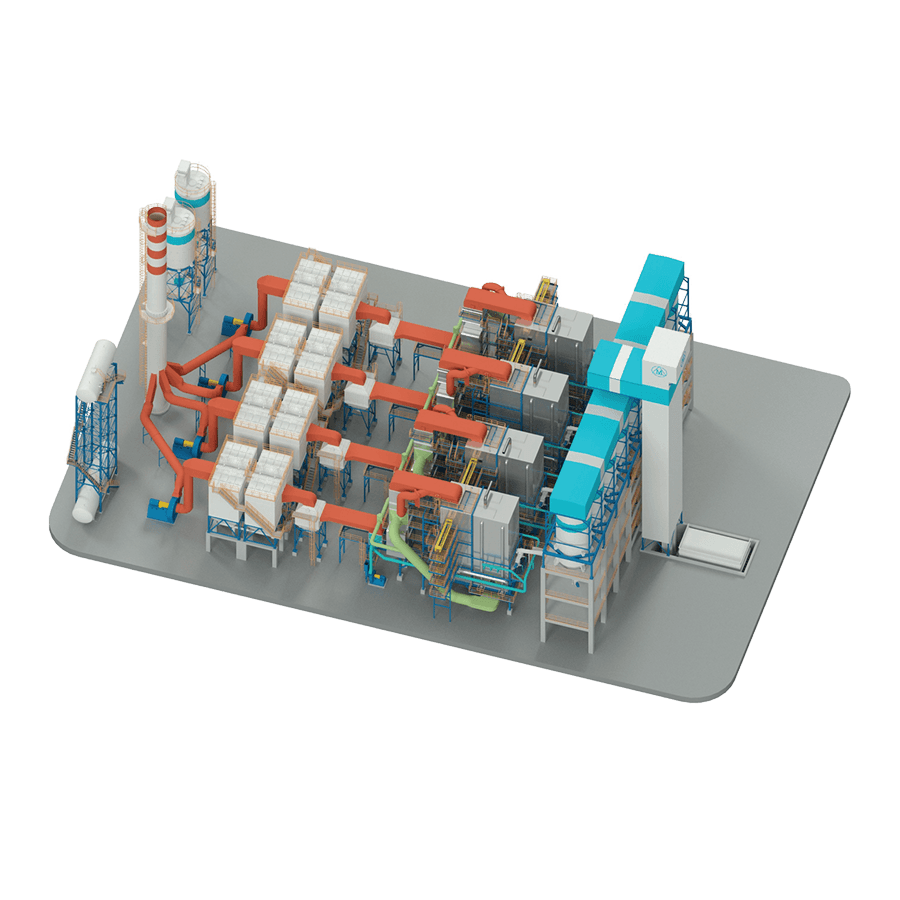
“Reciprocating pumps use pistons or plungers to deliver high-pressure fluid flow, ideal for industrial, chemical, and boiler feed applications.”
Reciprocating pumps
Reciprocating pumps are positive displacement pumps that use a piston or plunger to move water. These pumps are capable of delivering high-pressure water, making them suitable for plants that require high-pressure feed water.
INTRODUCTION OF RECIPROCATING PUMP
Reciprocating pumps are a type of positive displacement pump that operates by using a piston or plunger to create a reciprocating (back-and-forth) motion within a cylinder. So this motion creates a pressure difference that draws fluid into the cylinder on one stroke and then pushes it out on the other stroke. Due to that, they are widely used in various industries and applications due to their ability to deliver a steady flow of fluid at high pressure.
PRINCIPLE OF RECIPROCATING PUMP
Reciprocating pumps are positive displacement pumps, which means they deliver a fixed amount of fluid with each stroke, regardless of the discharge pressure. Therefore, this makes them suitable for applications where a constant flow rate is required.

Image 1 – Principle of reciprocating pump
TYPES OF RECIPROCATING PUMP
In power plants, the selection of boiler water pumps depends on the plant’s specific requirements and operational characteristics. So the main types of feed water pumps used in power plants include:
Piston Pumps: These pumps use a piston inside the cylinder to create the reciprocating motion. They are known for their high-pressure capabilities and are often used in applications where pressure is critical, such as hydraulic systems.
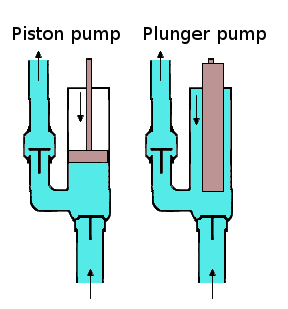
Image 2 – Piston pump / Plunger pump
Plunger Pumps: Plunger pumps use a plunger instead of a piston to create the reciprocating motion. They are commonly used in high-pressure applications like industrial cleaning and water jet cutting.
APPLICATION OF RECIPROCATING PUMP
- Oil and gas industry for well stimulation and hydraulic fracturing.
- Water treatment and desalination (can be used as a feed water pump in boiler system).
- High-pressure cleaning systems.
- Injection of chemicals in industrial processes (Chemical pump).
- Automotive engines (in the form of reciprocating piston engines).
- Refrigeration systems (reciprocating compressors).
PROS AND CONS OF RECIPROCATING PUMP
Advantages
- Ability to handle high pressures.
- Suitable for viscous fluids and those with varying viscosities.
- Self-priming in many cases.
- It can provide a constant flow rate.
Disadvantages
- Higher maintenance requirements compared to other pump types.
Pulsating flow can require additional dampening systems.
Efficiency can be low compared to centrifugal pumps for specific applications.
CONCLUSION
In summary, while reciprocating pumps have their advantages in terms of high-pressure capabilities and precision metering, they are not the primary choice for boiler feed applications in most boiler systems.
(Vn-Industry.)