“Selecting appropriate coal types based on boiler specifications ensures efficient operation, energy savings, and minimized environmental impact.”
Which type of coal should be chosen for boiler operation?
Optimizing your choice
INTRODUCTION
In the manufacturing industry, selecting the appropriate type of coal for boiler operation is crucial to optimize production efficiency and minimize environmental impact. This is especially important for the two common types of boilers: fluidized bed boilers and chain grate boilers.

1- Fluidized Bed Boilers
Fluidized bed boilers, known for their fluidized bed combustion chambers, create optimal burning conditions and reduce harmful gas emissions. For these boilers, choosing the right type of coal is essential.

The preferred coal for fluidized bed boilers should be small in size, have low volatile matter, and low moisture content (ARB < 25). The calorific value of the coal is also significant, varying based on the combustion method:
- Bottom Ash Combustion (non-circulating): 3800 – 4100
- Bottom Ash Combustion (circulating): 5200 – 5700
- Sand Combustion Bed: 3800 – 4100
To operate fluidized bed boilers efficiently, the chosen coal should have a particle size ranging from 0 mm to 10 mm.

2- Chain Grate Boilers
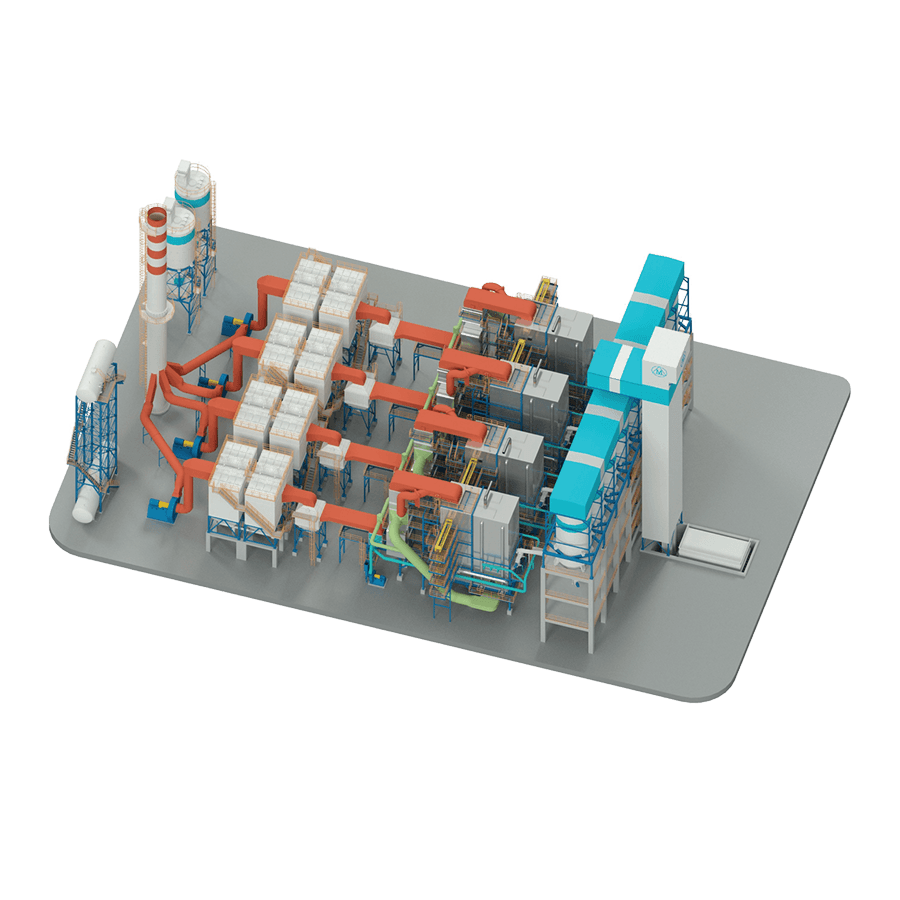
Chain grate boilers, which use heat from fuel to produce steam, require a different type of coal than fluidized bed boilers. With a highly mechanized combustion chamber, chain grate boilers can burn larger and higher calorific value coals.

Coal for chain grate boilers typically has a larger particle size (up to 50 mm), low moisture content (ARB < 40), and varying calorific values depending on the boiler load:
- Boiler load below 50%: 3800 – 4100
- Boiler load between 50% to 75%: 4800 – 5000
- Boiler load above 75%: 5200 – 5400
To ensure the stable and efficient operation of chain grate boilers, the selected coal should have a particle size from 0 to 30 mm or from 10 to 30 mm.

CONCLUSION
Choosing the right type of coal for each boiler type is crucial to ensure operational efficiency, energy savings, and environmental protection. Focusing on factors such as coal particle size and calorific value is key to optimizing the production process and preserving the environment in the industrial sector.
(Vn-Industry.)
Home page: https://vn-industry.com/