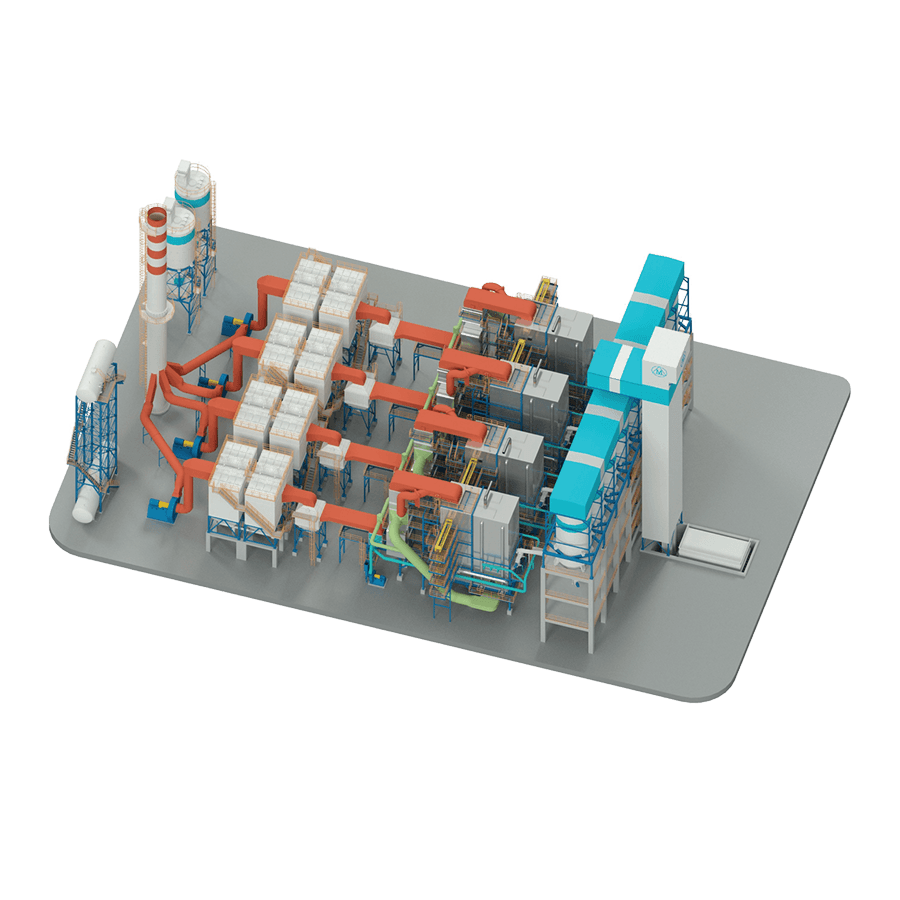
“Boilers in wood processing ensure efficiency and quality by supporting drying, pressing, coating, and sustainable biomass fuel use.”
APPLICATIONS OF BOILERS IN THE WOOD PROCESSING INDUSTRY
Applications
INTRODUCTION
Boilers play a critical role in the wood processing industry, providing the necessary heat and steam for various operations that turn raw wood into finished products. Boilers support processes such as drying, pressing, and finishing, which require consistent, high temperatures. By supplying heat efficiently, boilers enable wood processing plants to operate reliably and meet quality standards. Below, we discuss how boilers benefit the wood processing industry and explore the main applications that enhance productivity and product quality.

1. Wood Drying and Moisture Control
One of the most essential applications of boilers in wood processing is wood drying. Before raw wood can be further processed, it must be dried to a specific moisture level. High moisture content can lead to warping, cracking, and other defects in the final product. Boilers produce steam or hot water that heats drying kilns, which are large chambers where wood is dried uniformly.

Drying wood in kilns is faster and more controlled than air drying. By using boilers to generate heat, wood processing facilities can ensure a stable drying process, reducing moisture to the desired level. This precise control minimizes defects, improves product consistency, and reduces waste, contributing to a more efficient production line.
2. Veneer and Plywood Manufacturing
In veneer and plywood manufacturing, boilers provide the heat required to press and bond multiple wood layers together. Pressing requires precise temperature control to ensure that the adhesive cures properly, resulting in a strong, durable bond. Boilers generate the steam needed for this process, heating the wood layers to the right temperature.
By using steam from boilers, manufacturers can maintain the high temperatures required for the gluing and pressing stages. This application not only improves the quality of veneers and plywood but also enhances production efficiency by allowing quicker curing times and reducing downtime. High-quality steam also helps prevent over-drying or scorching of wood layers, maintaining product appearance and strength.

3. Particleboard and MDF Production
For particleboard and Medium-Density Fiberboard (MDF) production, boilers support various stages of the manufacturing process. Boilers generate steam that softens wood fibers, making them more pliable and easier to compress into boards. This steam application is crucial for breaking down wood particles and achieving uniform texture and density in the final product.
Additionally, boilers help regulate temperature during the pressing process. MDF and particleboard production requires high pressure and temperature to bond particles with adhesives. Boilers provide the steady heat needed, ensuring that the boards meet industry standards for strength and durability.
4. Heat Treatment for Pest Control
The wood used for furniture, construction, and other applications often requires heat treatment to eliminate pests and insects. Boilers play a significant role in this treatment process by supplying the heat needed to raise the wood’s internal temperature. The heat kills pests without using chemicals, making it an eco-friendly option.
Using boilers for heat treatment ensures that the process is efficient and safe. Wood reaches the required temperature consistently, meeting international standards for pest-free wood. This treatment also improves the longevity of wood products, preventing infestations and damage.
5. Boiler as a Biomass System
The wood processing industry often has access to wood waste, such as bark, sawdust, and wood chips, as a by-product of production. Many facilities use this waste as biomass fuel for boilers, creating a sustainable, cost-effective energy source. Biomass boilers convert wood waste into heat and steam, reducing dependency on traditional fossil fuels.
Using wood waste as fuel has multiple benefits. It lowers operational costs by reducing waste disposal fees and cuts down on fuel expenses. Additionally, it contributes to environmental sustainability by reducing carbon emissions and reliance on non-renewable energy. Biomass boilers provide an energy-efficient solution, converting waste into valuable heat for ongoing production processes.

6. Temperature Control for Finishing and Coating Processes
During the finishing and coating processes, boilers provide heat to maintain optimal working conditions. Temperature control is critical for applying stains, varnishes, and other finishes to wood products. If the temperature is too low, finishes may not adhere properly or dry unevenly.
Boilers ensure a stable, controlled environment for these finishing processes. With consistent heating, the finishes dry evenly, resulting in high-quality, visually appealing products. Maintaining the right temperature also reduces the likelihood of finish defects, which helps improve overall productivity and reduce waste.
7. Additional information
Some of the largest boiler importers in Asia
| DATE | HS CODE | HS CODE DESCRIPTION | IMPORTER NAME | IMPORTER COUNTRY | EXPORTER COUNTRY | VALUE [USD] | QUANTITY |
|---|---|---|---|---|---|---|---|
| 2020-07-10 | 853900 | Electrical machinery and equipment and parts thereof | THE SIAM COMMERCIAL BANK | Thailand | India | 759,136,360 USD | 60 |
| 2020-03-07 | 842199 | Centrifuges for liquids/gases | THE SIAM COMMERCIAL BANK | Thailand | India | 588,382,369 USD | 19,524 |
| 2016-07-14 | 980100 | Vacuum flasks and other vacuum vessels | NABINAGAR POWER GENERATING CO.PVT LTD. | India | Germany | 299,826,061 USD | 2 |
| 2016-01-15 | 980100 | Vacuum flasks and other vacuum vessels | NABINAGAR POWER GENERATING CO.PVT LTD. | India | Germany | 288,422,840 USD | 2 |
| 2016-07-14 | 980100 | Vacuum flasks and other vacuum vessels | NABINAGAR POWER GENERATING CO.PVT LTD. | India | Germany | 245,124,104 USD | 2 |
If you have any concerns please contact us for more insight.
CONCLUSION
Boilers are invaluable in the wood processing industry, supporting a range of essential applications from drying and pressing to finishing and heat treatment. By generating consistent heat and steam, boilers enhance production efficiency, improve product quality, and contribute to sustainability. For facilities that can utilize biomass boilers, using wood waste as fuel offers significant environmental and economic benefits. These applications illustrate how boilers not only improve the wood processing industry’s productivity but also play a crucial role in sustainable manufacturing practices.
(Vn-Industry.)
Home page: https://vn-industry.com/