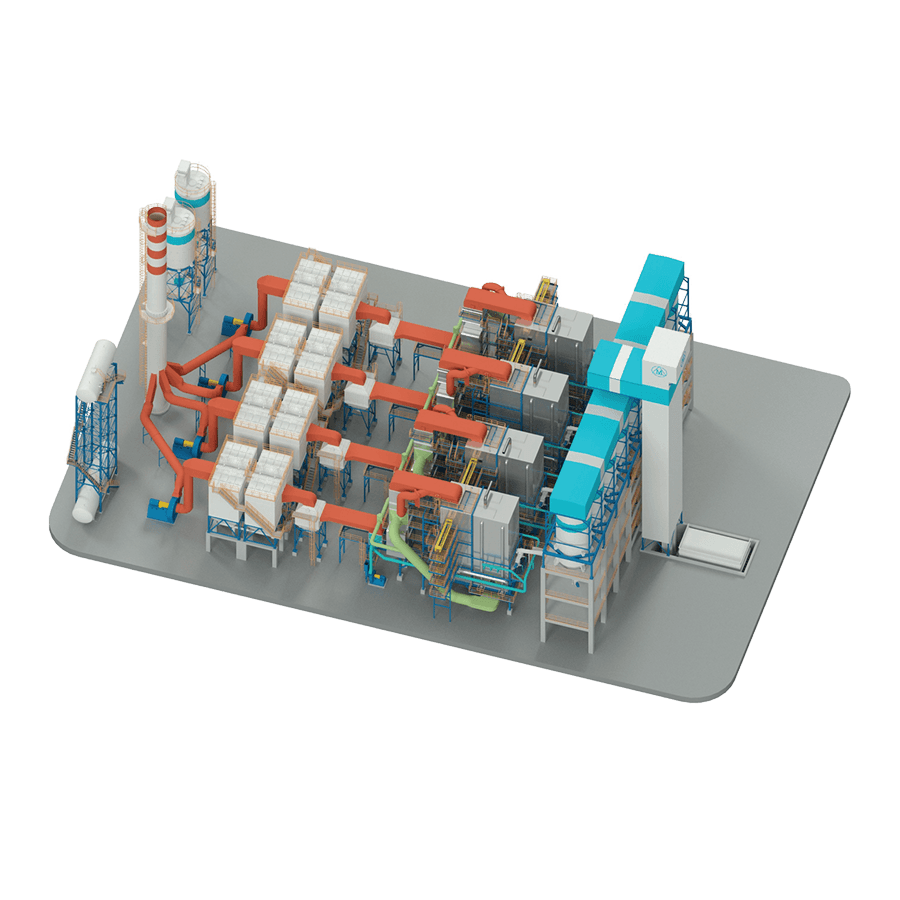
“Heat Recovery Boilers capture and reuse waste heat, improving industrial energy efficiency, reducing costs, and supporting sustainable, eco-friendly operations.”
Heat recovery boiler
Distributes heat through hot water, making them ideal for processes requiring lower temperatures.
INTRODUCTION TO HEAT RECOVERY BOILER
Optimizing energy usage has become paramount in the ever-evolving landscape of industrial processes. One technological marvel that stands out in this pursuit is the Heat Recovery Boiler. This article delves into the significance of Heat Recovery Boilers in various industries, exploring their functionality, benefits, and the pivotal role they play in enhancing overall efficiency.

Figure 1 – Hot recovery boiler operation
UNDERSTANDING HEAT RECOVERY BOILERS
Heat Recovery Boilers, often called HRBs, are integral components in industrial settings aimed at capturing and utilizing waste heat generated during various processes. These boilers are designed to recover thermal energy from flue gases, exhaust streams, or other high-temperature sources, converting it into usable heat or electricity. The versatility of HRBs makes them indispensable across a spectrum of industries, ranging from manufacturing to power generation.

Figure 2 – Hot recovery boiler
FUNCTIONALITY AND COMPONENTS
At the core of Heat Recovery Boilers lies their ability to harness wasted heat. The primary components include the economizer, evaporator, superheater, and condenser. The economizer, positioned at the boiler’s inlet, preheats the incoming water using waste heat from the flue gas. The heated water then moves through the evaporator, where it turns into steam. The superheater further increases the steam temperature, optimizing its usability in various industrial processes. Finally, the condenser extracts any remaining heat from the flue gas, enhancing overall efficiency.
APPLICATIONS IN VARIOUS INDUSTRIES
Power Generation:
- Heat Recovery Boilers play a crucial role in power plants, where they capture and utilize waste heat from turbine exhaust to produce additional electricity.
- The recovered heat enhances the overall thermal efficiency of power generation systems.
Manufacturing:
- In manufacturing processes, such as steel production, HRBs recover heat from furnaces, improving energy efficiency and reducing fuel consumption.
- The recovered heat can be utilized for space heating, water heating, or other thermal applications within the facility.
Chemical Industry:
- Heat Recovery Boilers find applications in chemical plants, where they recover heat from various processes, such as distillation or chemical reactions.
- This not only optimizes energy usage but also contributes to environmental sustainability by reducing greenhouse gas emissions.
BENEFITS OF HEAT RECOVERY BOILERS
Energy Efficiency:
- HRBs significantly enhance energy efficiency by capturing and reusing waste heat that would otherwise be lost.
- The recovered energy can be utilized for both thermal and electrical applications, reducing the reliance on external energy sources.
Cost Savings:
- By maximizing the use of available heat, industries can experience substantial cost savings in terms of reduced fuel consumption and lower energy bills.
- The initial investment in Heat Recovery Boilers is often offset by long-term operational savings.
Environmental Impact:
- The integration of HRBs helps industries reduce their carbon footprint by lowering overall energy consumption and emissions.
- This aligns with global sustainability goals and positions businesses as environmentally responsible entities.
CONCLUSION
In conclusion, Heat Recovery Boilers stand as a beacon of innovation in the quest for energy efficiency within industrial processes. Their versatile applications, coupled with the numerous benefits they offer, make them indispensable in today’s dynamic industrial landscape. As industries continue to prioritize sustainability and cost-effectiveness, the adoption of Heat Recovery Boilers is poised to play a pivotal role in shaping a more efficient and eco-friendly future.
(Vn-Industry.)
Home page: https://vn-industry.com/